

What Smartsheet Template Should I Use For Tracking Of Draws Against Commission
If phone calls, emails, and social media are the rima oris of an effective sales department, and commission is its heart, then the sales dashboard is no doubt its brain. Despite the simplicity of a sales team's accuse "sell more than" there is so much circuitous data behind their strategy and tactics that it would take an annotator per salesperson to make that data effective.
This is where sales dashboards come in. They transform endless spreadsheets and SQL databases into curtailed charts, clear results, and recommended actions. Each widget on a sales dashboard is placed and designed intentionally, with no more than and no less information than the salesperson, sales manager, or VP of sales needs to brand their decisions.
The most successful sales organizations use powerful, cloud-based dashboards that automatically sync data from all relevant sources - and in that location are plenty of options bachelor. What this commodity will focus on is the why of sales dashboard blueprint, with unlike sales metrics and what they mean. We'll too explain how to construct dashboards that do their job properly for different purposes, forth with the software that tin aid y'all create them, and numerous templates and examples to become yous started.
Appoint Intelligently, Shut with Precision, and Beat Every Goal
Acme performing sales leaders are e'er on. They rely on work direction tools like Smartsheet to requite them powerful insights into opportunities, and nuances to close each auction.
Acquire More than about Smartsheet for Sales Teams
Sales Dashboard Examples and Templates
To get a better thought of the breadth of sales dashboard types, look at the following drove of examples. At that place are numerous types that tin serve differently structured teams and the diverse roles within them:
Sales Pipeline and Forecast Dashboard Example
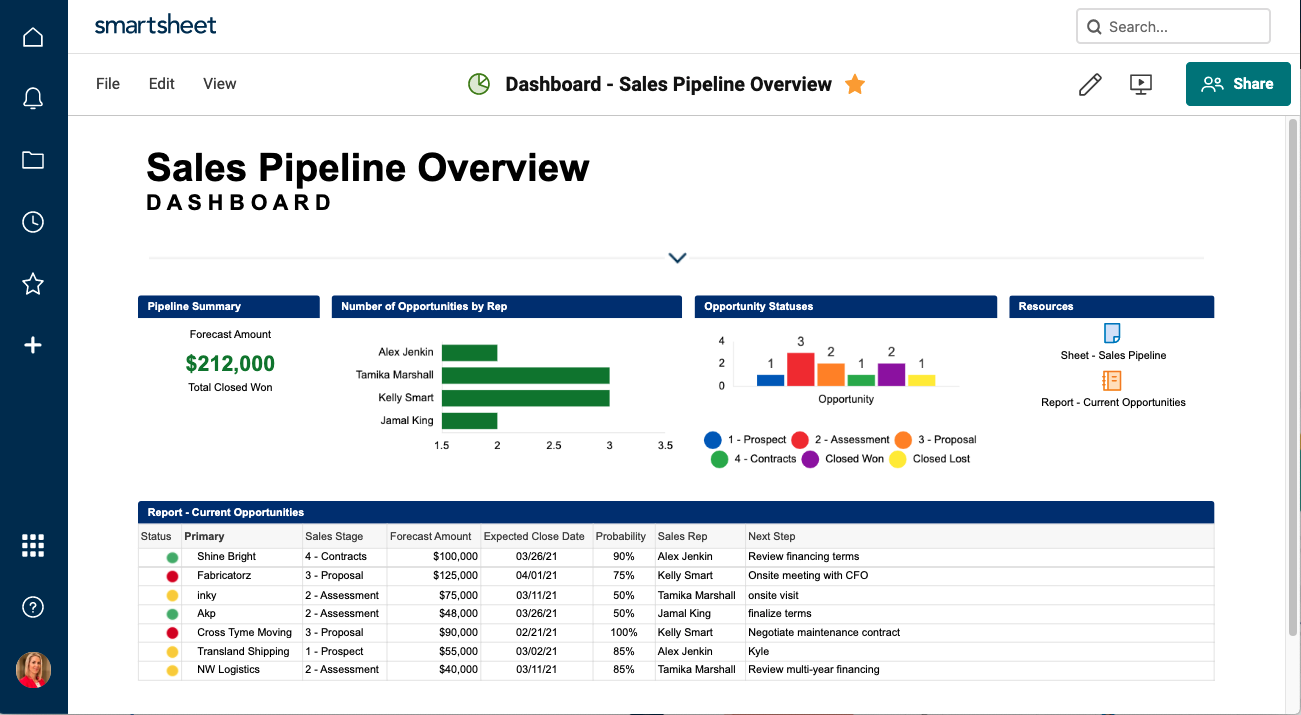
Executives who want to meet at-a-glance current and potential sales will appreciate a sales pipeline dashboard. A sales pipeline that also highlights a top-performing salesperson is a proficient motivator for team members. Additionally, this dashboard does a good job of providing links to critical sales material without cluttering upwardly the layout.
Sales Manager Quarterly KPI Dashboard Example
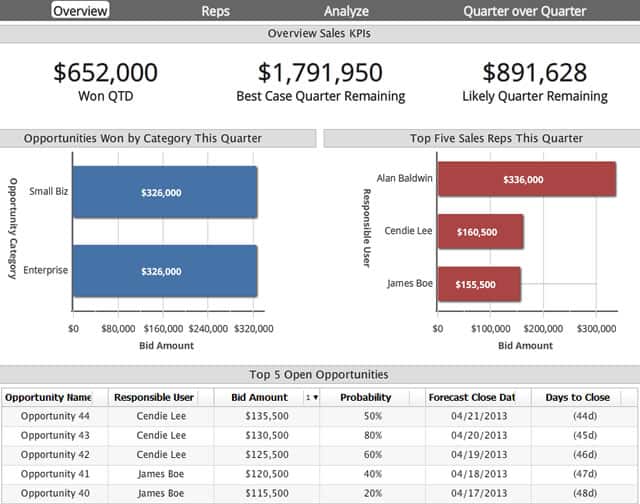
This dashboard is fabricated explicitly for the squad managing director, showing a few core quarterly data points, like opportunities won vs. the quarterly goal and the top sales reps. Sales managers can utilise a similar dashboard to make up one's mind who needs help, or who tin can be pushed to even college levels of functioning.
Executive Sales Dashboard Example
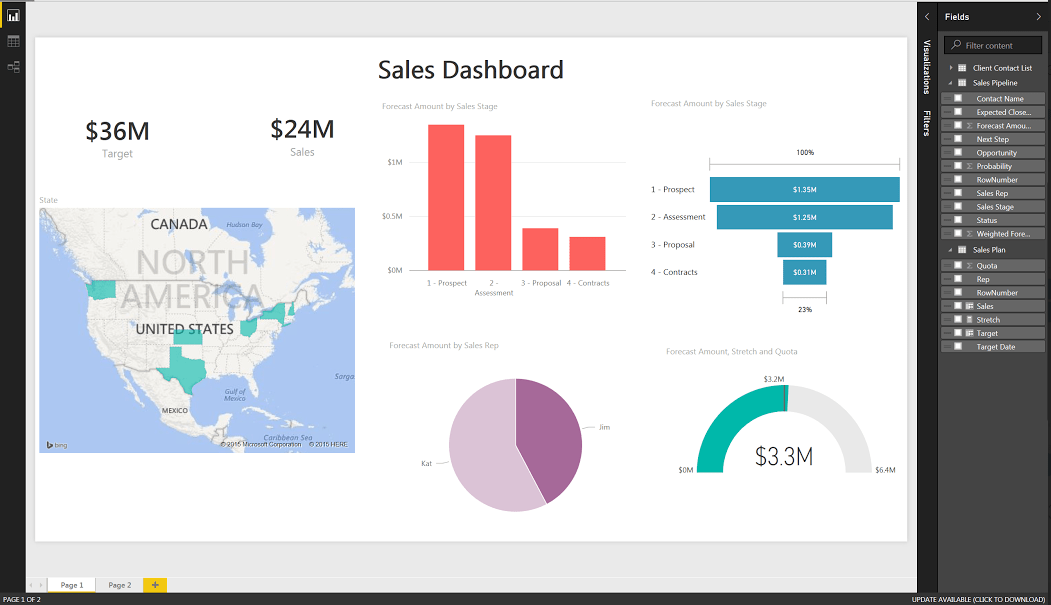
This simple sales dashboard uses a handful of highly-visual KPIs. It shows meters filling up towards team goals, the regions where customers are being won, and full general sales performance data.
Sales Management Dashboard Template
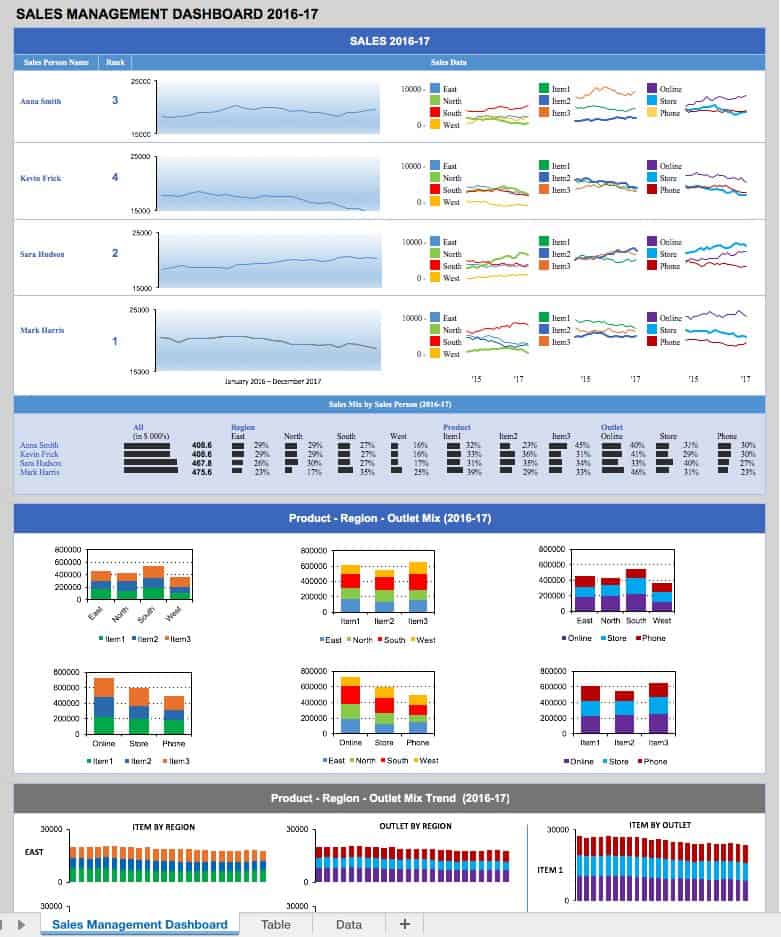
Utilise this sales management dashboard template to track performance by salesperson, product, region, and more. Having this data at your fingertips can provide insight into whatsoever problems that may demand to be resolved, raise employee accountability, and bulldoze progress.
Download Sales Direction Dashboard Template
Sales Manager Daily Dashboard Template
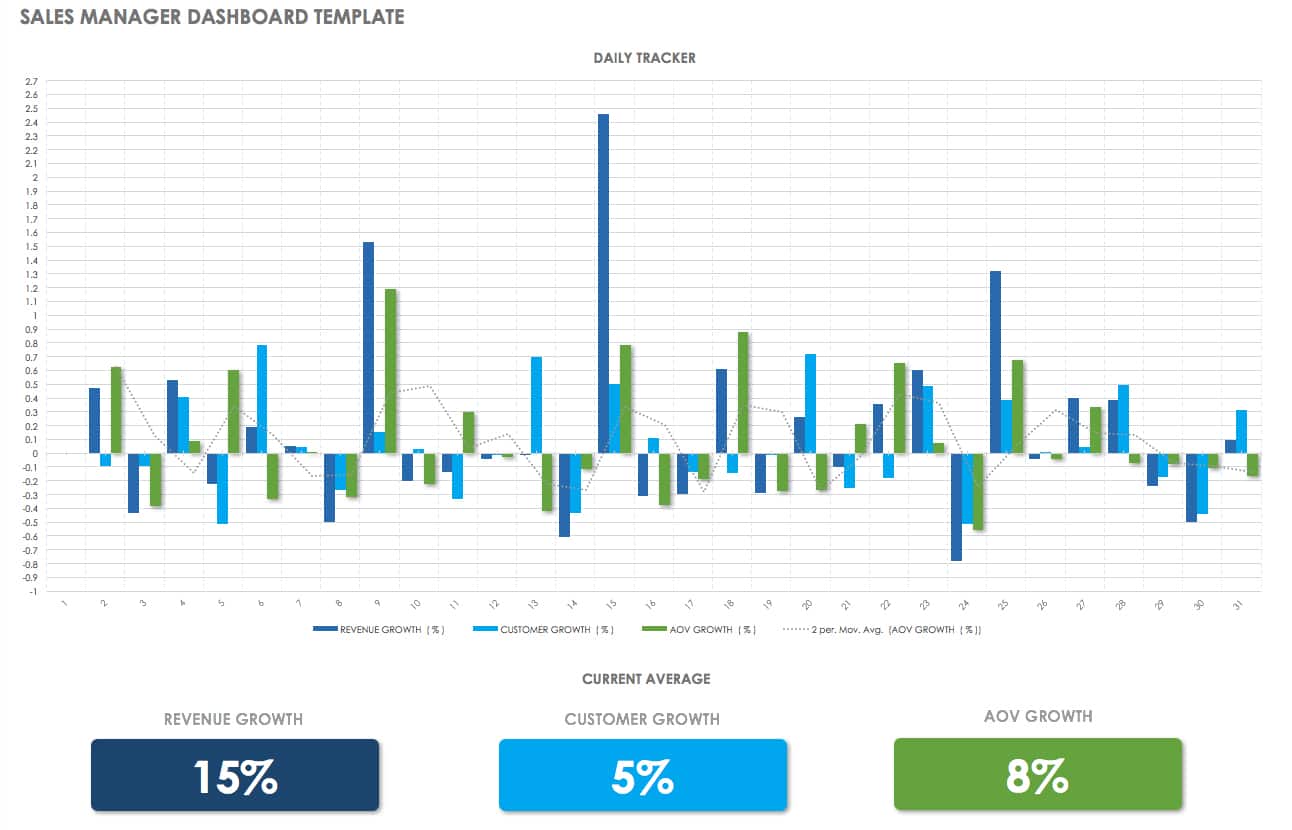
A sales director works with an existing team to make certain they are performing at optimum levels, and are meeting all their goals. Apply this template to instantly meet how your team'southward overall sales are doing daily, along with information nearly customer and acquirement growth.
Download Sales Managing director Dashboard Template
Lead Generation Dashboard Template
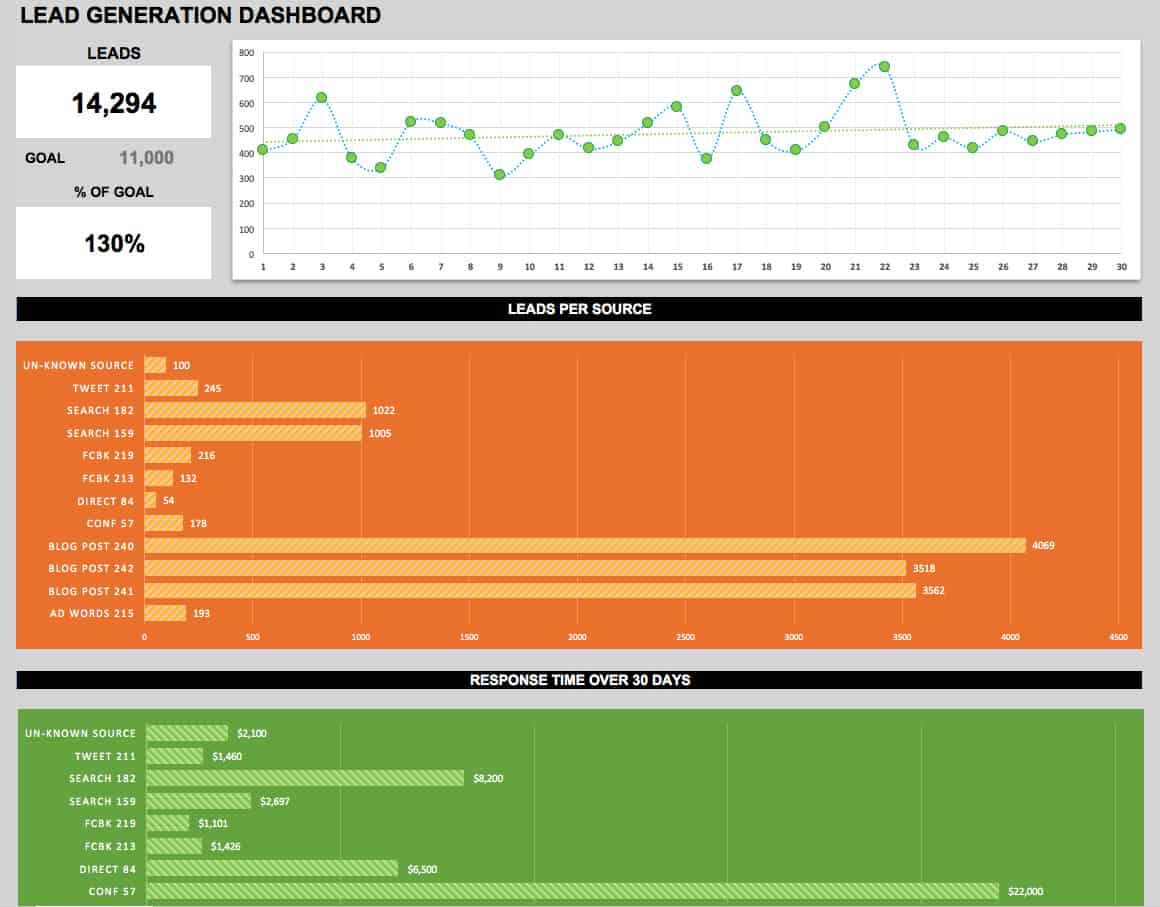
Use this dashboard template to assess your lead generation and conversion performance. Whether y'all're working independently or with a sales squad, a dashboard can provide a clear flick of your nearly successful pb sources, conversion rates, and your proximity to reaching your goals.
Download Lead Generation Dashboard Template
Executive Dashboard Template
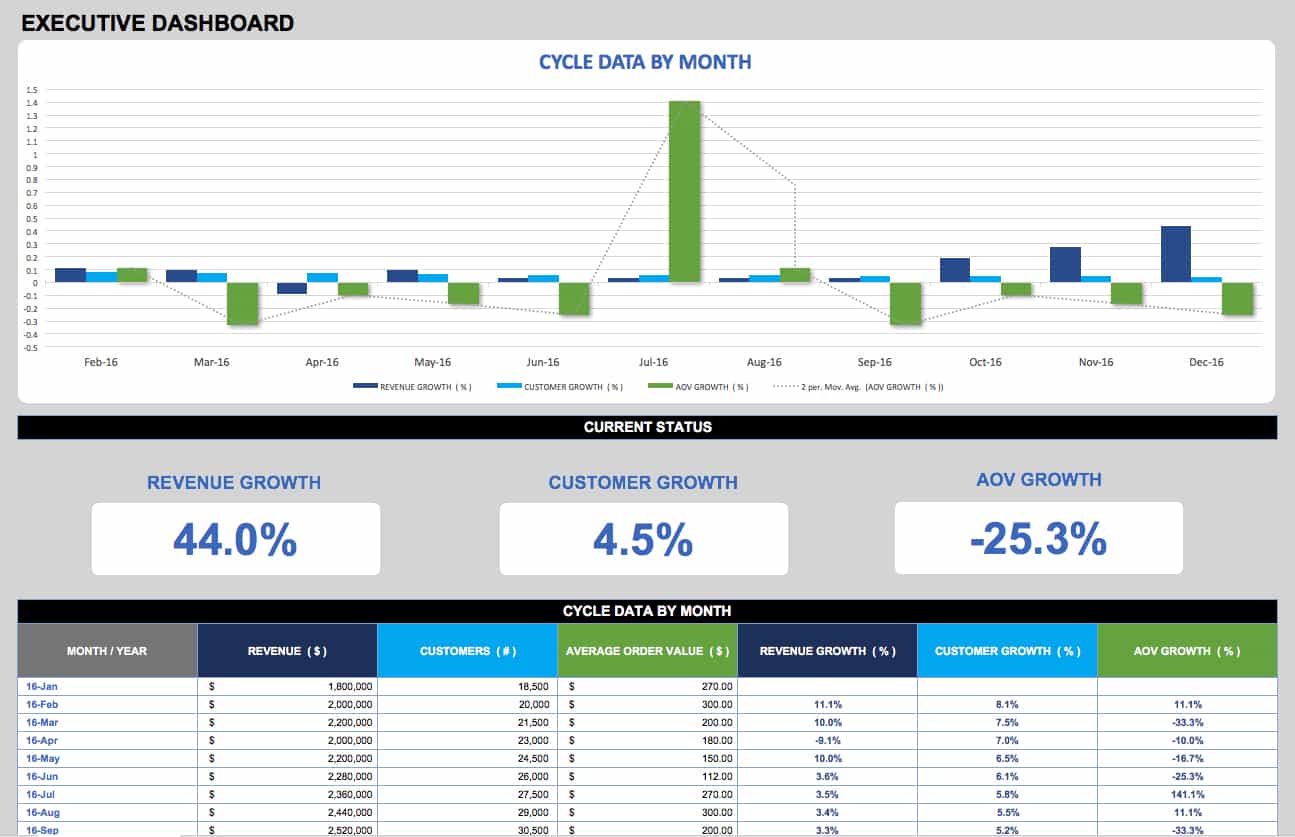
An executive dashboard provides the C-suite with a large-picture view of an organization by consolidating KPIs into a unmarried easy-to-read, graphical study. Choose your KPIs based on organizational growth goals and quantifiable measures of success. This template is but one executive dashboard example - to learn more, read our article on types of executive dashboards and all-time practices.
Download Executive Dashboard Template
Go along deals moving forrard with sales pipeline management in Smartsheet
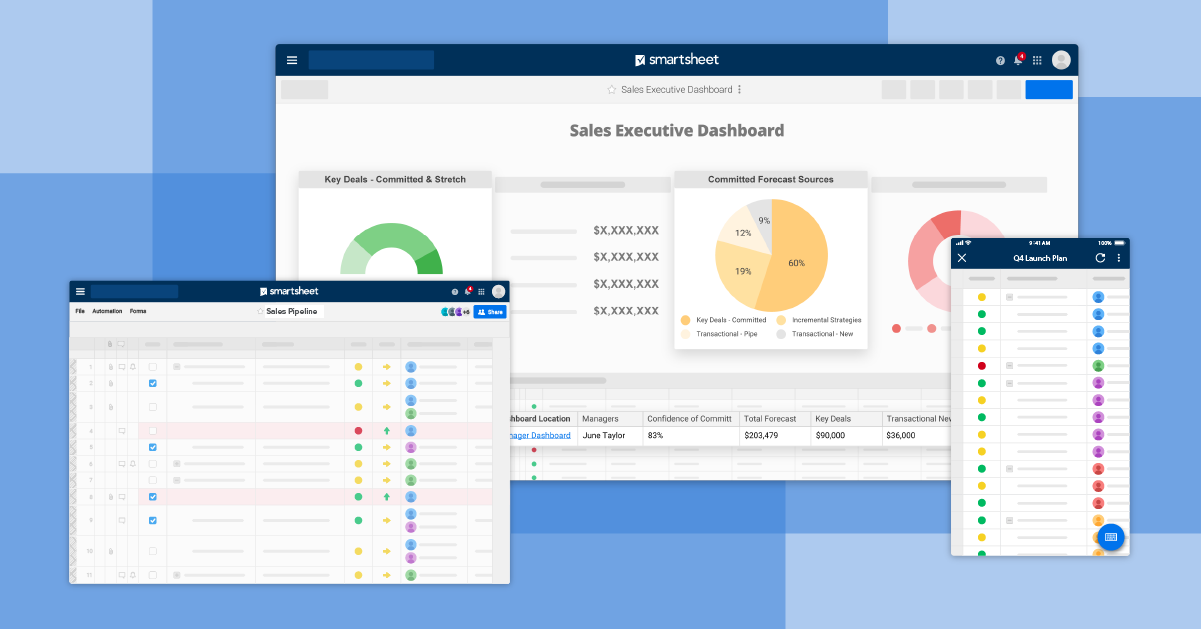
Smartsheet is a cloud-based platform that allows sales teams to effectively manage pipelines past creating i location to track and manage efforts, surface open and at-chance opportunities, and provide real-time visibility to improve forecasting. Run into Smartsheet in action.
Watch a costless demo
The Nuts of Sales Dashboards
Let's start by defining the term: a sales dashboard is an automatically-updated collection of metrics that assist its viewers gain insight into their current situation at a given time, and make decisions about what to do in real-time to achieve their organization's goals.
The timeline is important. Although a dashboard may be updated in real time, they generally only reflect a particular moment, which is important for performing a historical comparison to the dashboard at other times. This data lets you know whether the sales team's efforts are working towards improving the metrics. Nosotros'll break downwardly the pieces of a basic dashboard here:
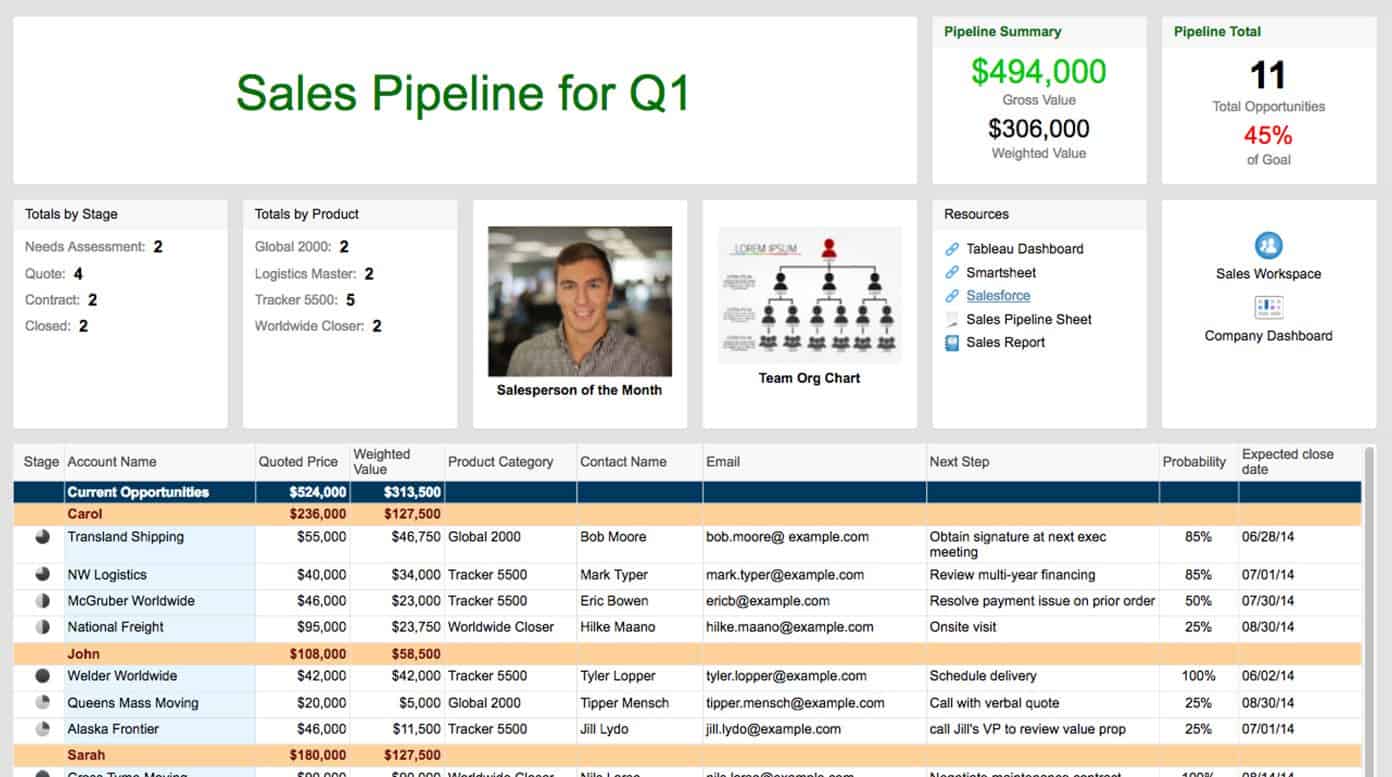
In this Sales Pipeline dashboard, at that place are a number of elements that can be found on various dashboards, though certainly non all of them.
- Championship: Your dashboard should exist labeled and so that viewers are certain of its purpose. The title needs to be specific and differentiated. This sales pipeline example is but for Q1, which prevents bloating with as well much unhelpful data.
- KPI 1: A KPI is a "key performance indicator," which is a metric whose value lets you know whether yous're on track toward specified goals. Oft in dashboards, KPIs have a color lawmaking, for instance green or black pregnant profit, and red meaning loss. In this example, we're using total value of the sales squad's efforts in dollars, which is pretty standard.
- KPI 2: There oftentimes are more than than just one KPI per dashboard, which give a more complete picture of the organization'southward health at a glance. For case, nosotros know from KPI 1 that there'southward nearly $500k in sales fabricated, but how many leads is that spread beyond? In this case, it'due south xi, which is below the goal. This ways that although there is more money in the pipeline than planned, it depends upon too few customers, meaning that more endeavour needs to be placed on adding new customers to the pipeline.
- Tally Metric: A dashboard shouldn't just exist fabricated of KPIs; other supplemental metrics help convey important data. In this metric, we run across how the opportunities are spread by stage of the sales pipeline - only two have actually closed, while four are still negotiating price. Maybe the salesperson needs more support from sales managers or senior account managers to help move the client to accepting the quote.
- Tally Metric two: This is another supplemental metric that tells the team which of their production offerings are making it into the pipeline. The team can apply this information to place opportunities for upsells or focus efforts on more pop and likely-to-close items.
- Competitive: Dashboards don't take to be all numbers and charts. This visual representation through a salesperson'due south headshot helps spur the team to greater competition, often a factor in sales squad performance. Information technology also motivates the featured individual to keep pushing to maintain their lead. Such a widget could besides contain a nautical chart showing the number of sales per person.
- Information: This type of widget, in this example an org chart, serves to give the sales team members information that could be important. In larger organizations, they may not know who are the managers for other divisions. Maybe they're cross-selling a product outside of their division, and need assist from the product manager to meliorate articulate its benefits to the lead.
- Links: On cloud-based digital dashboards, you tin easily insert links to other data as needed. Empower the people who use the dashboard to gather all the information they need from it, so they feel compelled to keep their dashboard handy at all times. If it isn't used, information technology isn't useful.
- Links 2: Once again, additional resources for sales team members and analysts that aren't worth featuring on the main dashboard.
- Information: Information technology isn't advisable for every type of dashboard, but you can include a raw or curated subset of the information necessary to manage the dashboard. In this case, all of the actual opportunities within the pipeline take their amount and contact data listed. A dashboard widget like this might be more useful for a sales manager rather than the sales team.
While this is just a short example, it highlights the demand for dissimilar types and classes of data within a dashboard, and how they're all logically linked. Information technology provides just enough information for managers and squad members to make decisions and locate vital information, without distracting or cluttering elements taking up room.
Planning a Sales Dashboard
Every bit you can run into from the dashboard basics, the creation of a single dashboard requires deliberate planning and design. How do you assess what metrics to place where, what are their behaviors, and what practice they tell you? Consider these questions as y'all programme your dashboard.
What's the Purpose of the Dashboard?
This question is the crux of the entire practice. Does your dashboard describe or prescribe? Does it assist a team coordinate efforts, or does it help stoke contest? What do yous desire someone to walk away from a dashboard knowing?
Who Needs to See the Report?
Determining the role and seniority of the individuals who will view your dashboard is the next important step. What types of decisions do they demand to make? Will it feed into other reports, or will it have other reports feed into information technology? Consider what Ryan Bottorff, Director of Marketing & Sales Operations at ReviewTrackers has to say:
Keserwani adds, "Dashboard categorization is based on the level of controlling that information technology is going to back up. The strategic dashboard is for top management, tactical is for middle management, and operational dashboards are for lower direction and employees."
How Oft Should You lot View the Dashboard?
Having this time information tin can assistance determine the scope of data to include and the type of dashboard to create. If information technology's a monthly team dashboard that gives overall status and a time to change "salesperson of the month," information technology would include the last month's sales data carve up past teams, reps, regions, and more. If it'due south a daily dashboard for a salesperson, information technology might include the all-time selling items, opportunities in motility, and the listing of calls they're supposed to make that 24-hour interval. Unlike timelines demand different data.
Over What Time Period(s) Will the Data Be Collected?
Not quite the same concept as how often the dashboard will be viewed, this consideration is for the literal quantity of time the data needs to exist displayed. Yr-over-year comparisons are skilful if goals and bounty structures are based on these improvements, merely if the product isn't still a year old, that won't work. Take a subscription-based software, for example, weekly user retention might be an important metric to make up one's mind if customers need more service or incentives within the software.
How Many Types of Data Will Be Included?
This is a affair of grade and function. Not just should the literal quantity of widgets in your dashboard be relatively small then that it isn't too cluttered, but as well they should work together to paint a picture. Metrics similar "total sales volume," "total volume stuck in opportunities in progress," and "number of leads left in the funnel" all complement each other. This data combined in a single dashboard provides a articulate indication of how much money has been made, how much is on the table, and how much possibly could exist made with electric current marketing efforts. Throw in "average sales per rep" and yous have a good goal post for reps to attain. But calculation a metric like "promotions conducted" might not add anything for the boilerplate sales rep who doesn't deal with marketing, nor would "sales revenue per hour" be benign data for a production with a month's long sales bike.
What Is the Ideal Way to Visualize the Data?
When it comes to how to represent your various data points, Bottorff suggests, "What's important to me is the ability to empathize the information without clicking on the report. So go along things simple: highlight trends and outcomes. If someone wants the granular data, that's slap-up, but allow them click into the study to find out. Don't overwhelm them with too much upwards front.
"Another affair that's of import to me is variety. Remember: You build a dashboard for the members of your team. They're more likely to read a dashboard and make sense of it if there's a petty multifariousness and fun. That's why I don't make everything bar graphs. I'll include an odometer, and a couple other fun things that aren't too flashy, but add plenty variety to brand the dashboard fun."
How to Create a Sales Dashboard
Planning was near of the boxing - now you lot need to create the dashboard. Follow these seven steps:
- Decide the KPIs and Sales Metrics Y'all Demand to Monitor
Based on which people demand to see the data, how ofttimes, and the dashboard's purpose, cull your KPIs. In that location are examples later in this commodity to help you brainstorm choosing. - Locate Where That Data Currently Lives
You already have systems in identify to collect the data. There are spreadsheet applications like Excel and Google Sheets, and database applications like MySQL and Admission, which may have custom automations that collect and clarify the data. These may contain data from many different departments, but also don't take standard formatting that's always reliable. There are also client relationship management (CRM) systems which sales teams are likely to already use to collect and store data, similar leads, opportunities, deal status, and revenue. Uncover the location(s) where your required data lives and piece of work with devs and the systems to import it into 1 centralized dashboard. - Determine How Your Dashboard Volition Be Viewed
Location is everything. Is this a dashboard for a team's general status? Maybe displaying it on a big TV central to the sales section is in order. Is this for field reps to organize their efforts? A mobile-optimized dashboard with limited metrics would be better. An inside-sales squad? Create something just correct for their company laptop. - Employ Your Requirements to Evaluate a Dashboard Software Vendor.
You tin cobble together a dashboard in Excel with PivotTables, only it will accept limited existent-time capabilities and will crave reformatting data often. Many existing CRMs take more advanced dashboarding capabilities, just they just utilise data that can be imported to them, and ofttimes they are focused on proprietary software ecosystems which lock down information. In that case, you'll need to find a dashboard solution that can sync information from all relevant data sources - oft these apps let developers to utilize APIs to import data from a CRM or other tools, and tend to take ameliorate, more than informative UIs that you can optimize for any screen. Information on dashboard vendor options appears subsequently and at the stop of this commodity. - Import Data from Your Data Solutions
Now that yous have your dashboard platform and your data sources selected, tie them all together through built-in automations or custom developed solutions. - Blueprint and Implement Graphical Visualizations
Based on the plans you made at the first of this procedure, build your dashboard with just the correct amount of data to inform decision-making and actions, go far aesthetically pleasing (but not likewise chaotic), and tell an honest story nearly current sales status. - Share the Dashboard with Your Squad
With a proper, real-time sales dashboard gear up to go, share information technology with all relevant team members and begin the process using the information it provides to perform better and increase sales.
Common Mistakes in Sales Dashboard Design
Just because you've congenital a dashboard that has everything you need doesn't hateful information technology'southward perfect. There are tons of pitfalls and kinks to avoid. Address these bug quickly to ensure your dashboards are every bit useful equally possible. The following are mutual mistakes y'all should avoid:
Building a 1-Size-Fits-All Dashboard
Since dashboards are built for varying purposes, don't try to make 1 that suits the needs of all. Including as well much information will either destroy the simplicity required to brand quick assessments and decisions, or could exist merely inappropriate. All sales reps probably shouldn't see a widget that shows who has the everyman sales - that would hurt morale and is more than suited to a sales manager who wants to figure out whom to assist or who would do good from corrective action.
Not Adding Comparing Values
While often compared to a car's dashboard, a sales dashboard is quite unlike and it shouldn't simply show status at this one particular time. Comparison values adds context that viewers can depict meaningful conclusions from. Are sales up month-over-month, or downward? Was the same quarter last yr more or less productive?
Poor Layout Choices
Layouts can exist washed in many ways, simply some take away from the dashboards value of providing quick understanding. Bottorff advises, "I think of dashboards like storyboards. It may sound cheesy, but I want to tell a story left to correct, as much every bit possible. I want leads to flow into opportunity which flows into accounts."
A dashboard should follow the natural management of the human eye, and some metrics (those with greater importance) should be larger, rather than just having a collection of squares of equal size.
Using the Wrong Nautical chart Types
This advice goes back to your basic math classes - a pie chart is only good for ratios, a bar graph is good for quantifying, and a line graph is all-time for timelines. Don't get too creative. Use the best visualization for the job at manus.
Misusing Colour
Another important visual signifier for sales dashboards is color. As mentioned earlier, a number could exist shown in dark-green for positive acquirement or blood-red for negative, or yellowish for at-risk. Adding colour in this manner provides a quick agreement of practiced/bad that can exist investigated further by the viewer. Colors as well help differentiate widgets from each other, and the data inside them. If yous are including a regional map widget in your dashboard, each region should have its own colour, and then the pie chart that gives a ratio of sales volume for each region should have the corresponding color on information technology.
Making People Exercise Mental Math
A dashboard isn't a place for analysis - a dashboard is the study from the analysts. Information technology's like feeling hurting - the hurting is simply a signal that tells you to pay attention to the flaring surface area, and practice something about it. It's the work of a specialist to identify the cause, that'southward not your concern. Dashboards should have no math, merely results.
Mismatching Its Usage Frequency
Is a dashboard study going to be seen every twenty-four hour period? If then, and then simply show the results pertinent to today. A daily written report doesn't demand the unabridged month's worth of potential problems, just the ones that must be managed now.
How Much Data Is Too Much?
Bottorff advises, "Continue it simple. That'due south the biggest thing. The point of the dashboard is to communicate. So you don't want to overload with besides much information. As a rule of thumb, I won't add more than than nine components to a dashboard. Each component (chart, graph, etc.) should only tell one affair. Every bit a sales and marketing leader, you love earthworks into the data, but that doesn't mean y'all should be broadcasting the minutia to your office everyday."
Important Sales Metrics to Rails
There are a wide diverseness of metrics yous can include on dashboards, based on their purpose. In full general, yous should be cartoon at to the lowest degree a few from the list beneath, then familiarize yourself with them:
- Airtight Opportunities: How many deals have generated revenue, and how much revenue total?
- Leads by Source: Effigy out which channels are resulting in leads. Are you generating them from Facebook ads, make ambassador street teams, or someplace else entirely? Know where to focus efforts to fill the sales pipeline.
- New Business Versus Upselling: It's important to know your retention rate, and have a healthy ratio of new concern coming. Remember the lxxx/xx rule: xx percent of your customers will churn yearly.
- Open Activities: These are the "to-do" list for most salespeople, and feature calls to brand, emails to send, and meetings to schedule.
- Open Cases: These are customer service situations for existing customers, created when they reach out first. You need to address these customers speedily, and information technology's typically account managers who make contact.
- Open Opportunities: This is your lead-tracking metric, letting you lot know who to phone call on and work with to close deals.
- Opportunities By Due: This metric helps illustrate to management how far behind the team is as a whole, and if there are team members overburdened who need to have opportunities moved to others with lighter schedules.
- Pipeline: This common CRM metric shows the current stage of each opportunity, so you know how to talk to each lead as you help them through the sales funnel.
- Product Gaps: This is the gulf between expected sales of a production and the actual sales. Gaps need to be closed, and represent opportunities every bit a sales rep to notice out how to sell it better.
- Sales Past Closed Date: This data helps salespeople track what they need to close by certain days, because they have quotas and commission goals to encounter.
- Sales Bike: The average duration (in days, usually) for the squad to close a sale. This lets team members know how to plan revenue, commission payments, and their own pipelines.
- Win-Loss Rate: How many opportunities are closed and won vs. closed and lost? This is an of import metric to meliorate, merely too serves to let team members know how they're doing compared to the average.
Popular Software Options for Sales Dashboards
Dashboarding and information visualization software oftentimes come every bit standalone platforms that import data from many sources. These programs can also sometimes be integrated with CRM systems or generalized work direction platforms. Here are a few of the most popular options on the market:
Geckoboard
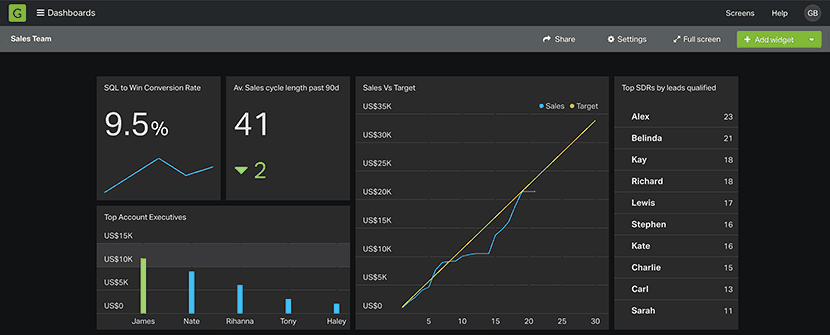
Self-described equally "alive Tv set dashboard software for business organisation," Geckoboard focuses on big, colorful widgets. These dashboards are all meant to be viewed past everyone at once on big displays, and integrates with tons of spreadsheet and information platforms so it can exist an all-in-one solution. It likewise has a mobile integration that lets team members take metrics with them on the go, still updating in real-time.
GoodData
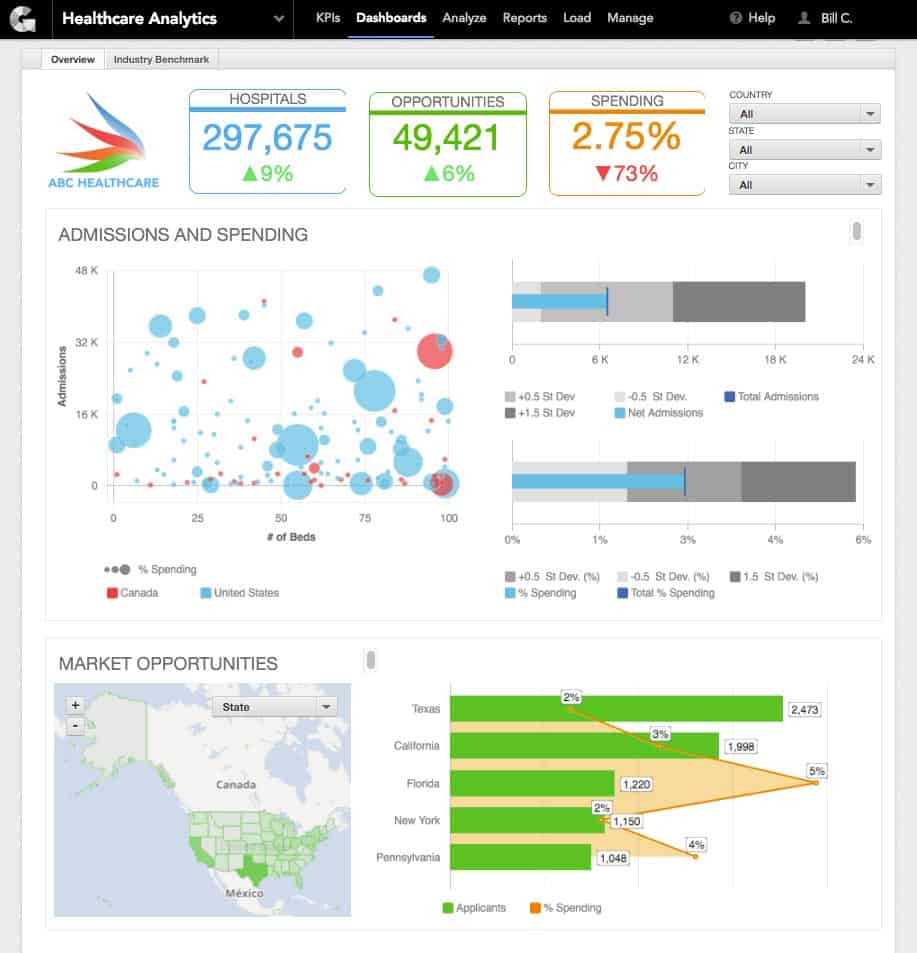
GoodData helps businesses get together insights from big quantities of data while likewise assisting them to find ways to monetize it, usually through on-demand access for customers and clients. The data this software handles is ofttimes more complex and complete than direct sales data.
InsightSquared
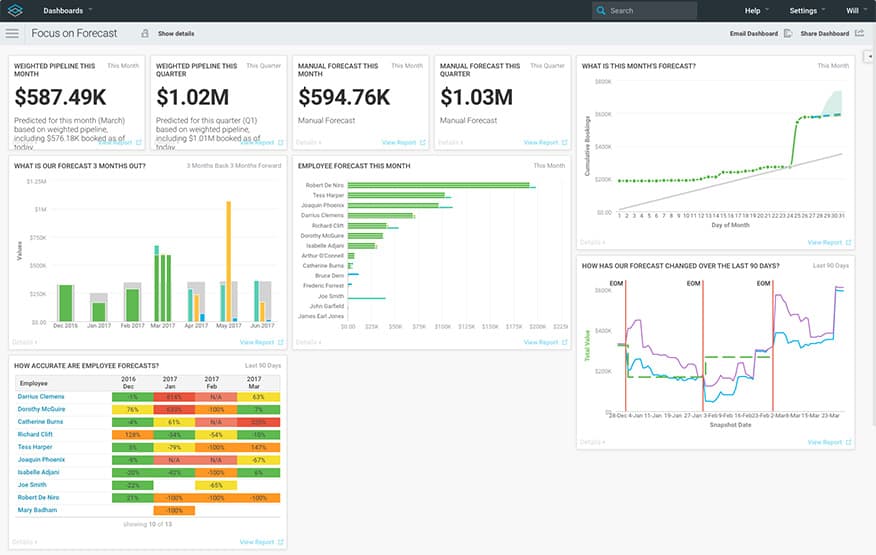
InsightSquared is a business intelligence tool that helps sales teams gather information in dozens of pre-fabricated reports. It'due south also ReviewTrackers' Bottorff's personal favorite. "InsightSquared integrates with Salesforce, and makes it easier to rails operation over time. InsightSquared has a library of fourscore some odd sales reports, then information technology's a actually helpful add-on for any sales ops team,"he explains.
Klipfolio
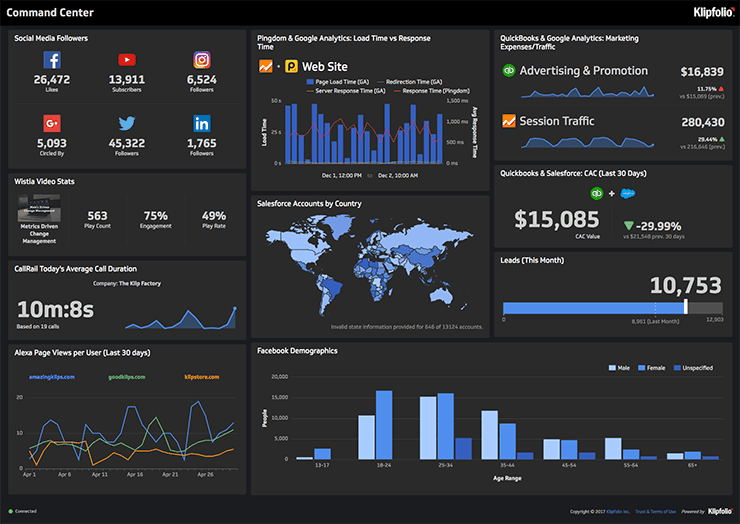
Klipfolio allows some robust widget editing and customization, taking in specific pieces of information from hundreds of sources and displaying it as a spreadsheet in the editor for final minute adjustments. Even new complex formulas can be manipulated in the editor to model projections to compare against information.
Qlik
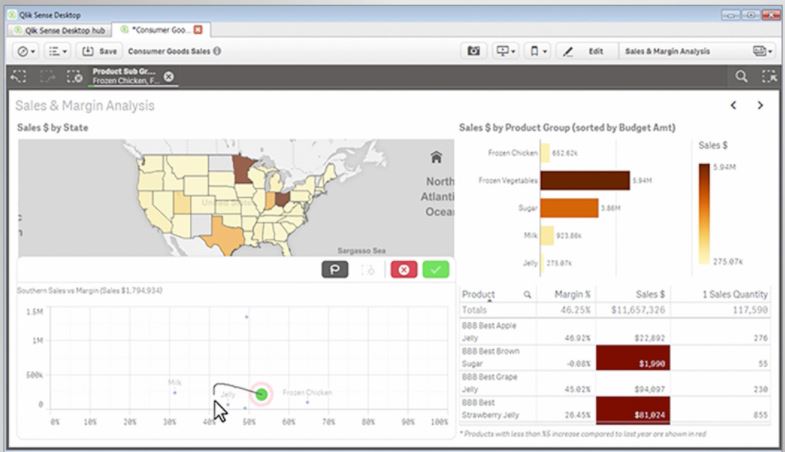
Qlik is a powerful visualization platform that enables automated associative indexing, drawing dissimilar data sources together and maintaining the data that is virtually fitting.
Salesforce
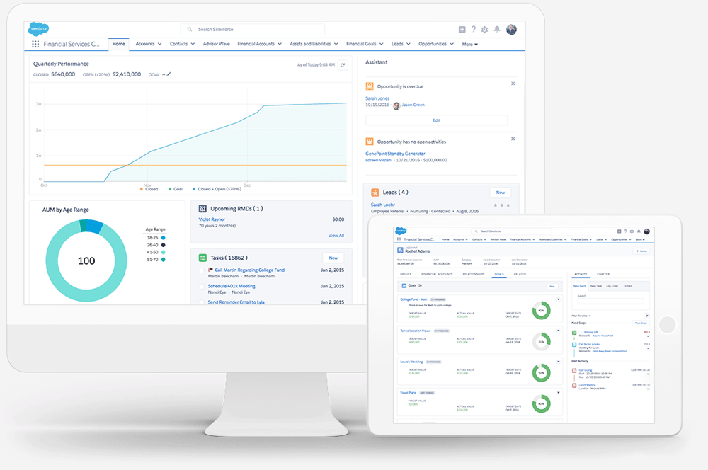
Salesforce is a massive CRM platform with a long history that goes far beyond just dashboard abilities. As the CRM of choice for many sales organizations, it is worthwhile to explore its native analytics abilities, as they are tied more than closely to your data and don't require importing or exporting.
SalesLoft
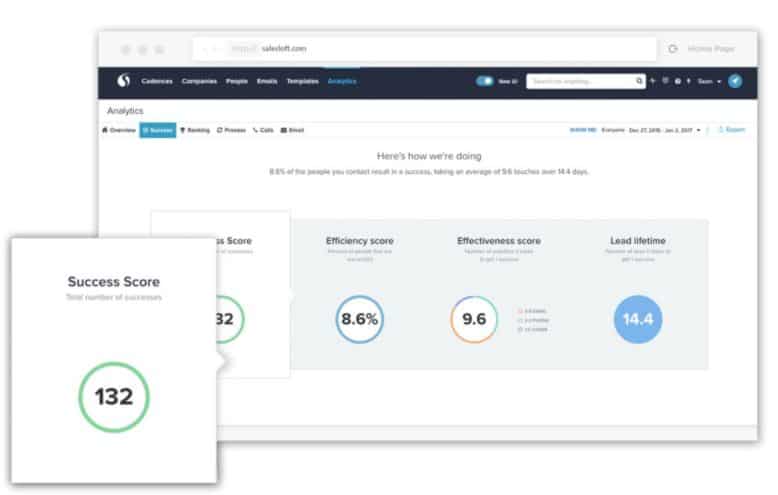
SalesLoft is also a CRM of sorts, with telephone call and email tracking functions tied into an automation platform that outputs smart dashboard widgets so users can understand effectiveness.
Brand Better Decisions, Faster with Sales Dashboards in Smartsheet
Empower your people to go above and beyond with a flexible platform designed to match the needs of your team — and adapt as those needs alter.
The Smartsheet platform makes information technology easy to plan, capture, manage, and report on piece of work from anywhere, helping your team be more effective and get more washed. Written report on fundamental metrics and get existent-time visibility into work equally information technology happens with roll-up reports, dashboards, and automated workflows built to keep your team continued and informed.
When teams have clarity into the piece of work getting done, there'south no telling how much more they can accomplish in the aforementioned corporeality of fourth dimension. Try Smartsheet for free, today.

What Smartsheet Template Should I Use For Tracking Of Draws Against Commission,
Source: https://www.smartsheet.com/sales-dashboard-examples-and-templates
Posted by: dillplarecturs.blogspot.com
0 Response to "What Smartsheet Template Should I Use For Tracking Of Draws Against Commission"
Post a Comment